Salado Isolation Mining Contractors Marks One Year Without a Recordable Injury and Surpasses Three Million Safe Work Hours
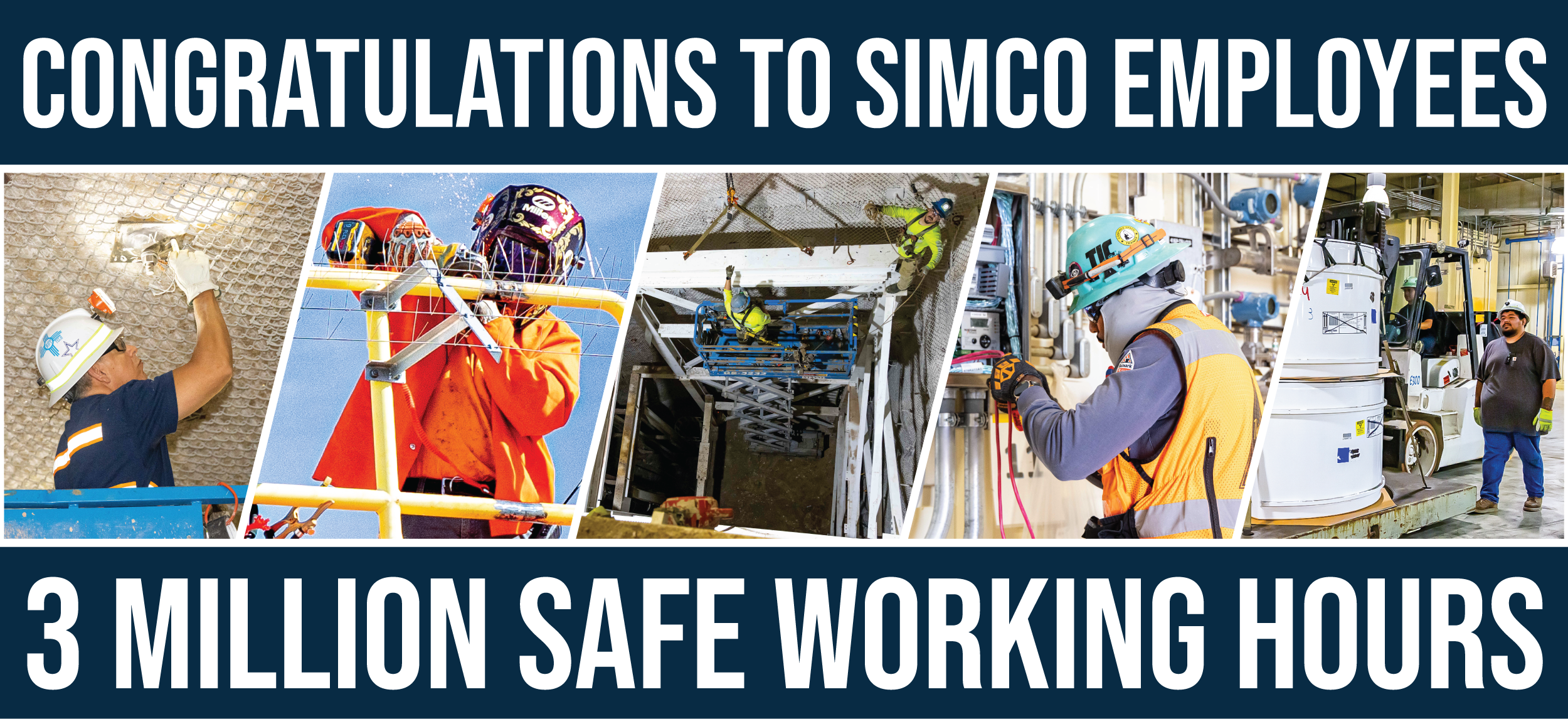
CARLSBAD, N.M., February 19, 2026 – Salado Isolation Mining Contractors (SIMCO) leadership at the U.S. Department of Energy’s Waste Isolation Pilot Plant (WIPP) announced today, its workforce has achieved two significant safety milestones in the same week: one full year without a recordable injury for a SIMCO employee, while surpassing three million consecutive safe work hours.
This achievement reflects the daily commitment of WIPP employees to follow established safety protocols, as every employee plays a role in maintaining a safe and healthy workplace.
This accomplishment highlights the effectiveness of WIPP’s safety culture, where employees are encouraged to bring safety concerns to management and ensure issues are properly addressed. Every employee is empowered to stop work when they feel conditions are unsafe, and are urged to participate in safety briefings, inspections, and ongoing training. The site will continue to build on this success by reinforcing safe work behaviors and identifying opportunities for further improvements in recordable injuries – defined as any work-related incident resulting in death, days away from work, restricted work, loss of consciousness, or medical treatment beyond first aid.
“Over the past year, we completed several significant construction projects and exceeded our goal in receiving and emplacing waste from generator sites in New Mexico and around the nation,” added Ken Harrawood, SIMCO program manager. “Achieving these safety milestones, while also successfully accomplishing a substantial amount of work, is truly remarkable. More importantly, we are reminded that every employee deserves to go home healthy at the end of the day.”
WIPP began operations on March 26, 1999, when its first shipment was received from th Los Alamos National Laboratory. To date, WIPP has received and disposed of over 14,700 shipments from New Mexico and across the nation. This includes over 2.8 million cubic feet of TRU waste safely disposed, comprising over 220,800 containers.
About WIPP
TRU waste began accumulating at generator sites since the 1940s with the beginning of the United States’ nuclear defense program. As early as the 1950s, the National Academy of Sciences recommended deep disposal of long-lived TRU radioactive wastes in geologically stable formations, such as deep salt beds.
In 1979, Congress authorized WIPP, and construction began in 1980. In 1992, Congress limited the disposal of defense-generated TRU waste by enacting the Land Withdrawal Act. In 1998, the U.S. Environmental Protection Agency certified WIPP for safe, long-term disposal of TRU waste. A year later, the New Mexico Environment Department issued a Hazardous Waste Facility Permit for WIPP to operate.
Located in Southeast New Mexico, about 33 miles east of Carlsbad, the WIPP repository is mined out of a 2,000-foot-thick salt bed formed approximately 250 million years ago where TRU waste is disposed of 2,150 feet underground. After the waste is emplaced, the salt will slowly encapsulate the containers, permanently and safely entombing them.